
Introduction
Meghalaya is one of the greenest and most peaceful states in India. It is a slow-moving world that stays close to nature, with rolling hills, forest-filled areas, waterfalls, and clean village paths.
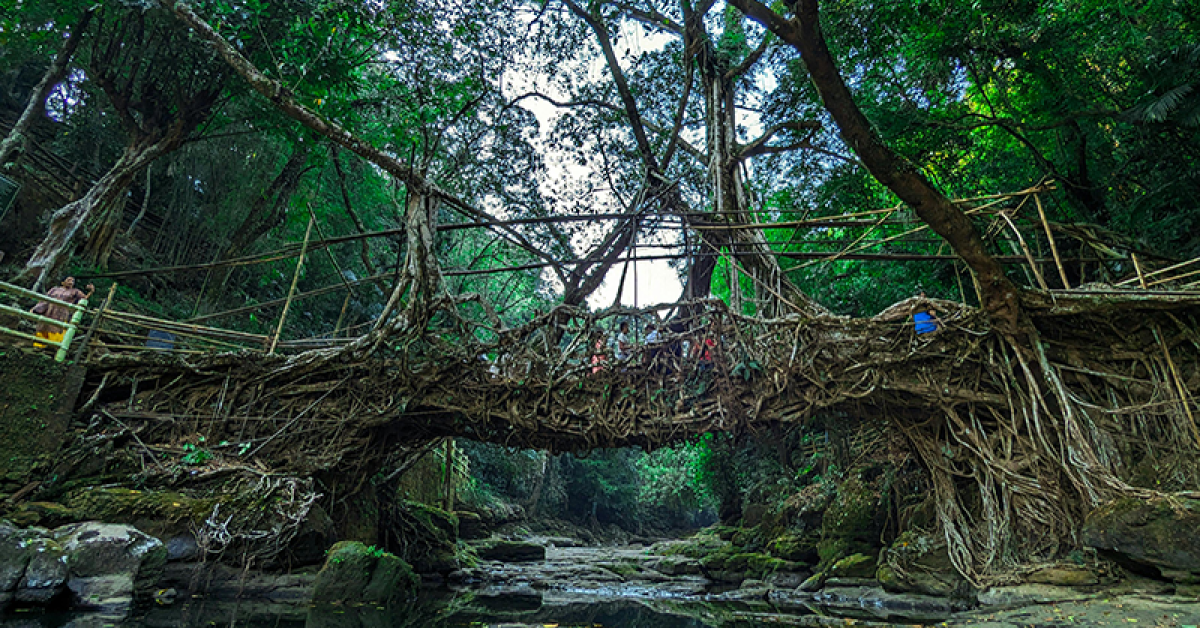
However, the most enchanting sight in the whole area is the Meghalaya living root bridges. These bridges are not built of either cement or metal. It takes years to cultivate and shape them using the roots of ancient rubber fig trees. These root bridges are like a dream to nature lovers, slow travelers, and photographers, who desire to have something unique and meaningful in their journey.
They show how human beings may collaborate with nature rather than confront it, and the effects of patience and respect may result in something beautiful. This qualifies them as one of the most beautiful examples of living architecture on the planet. Read on to know more about this:
Where Nature and Human Skill Come Together
The Khasi tribes of Meghalaya have been making bridges using tree roots for hundreds of years. They found out that the long and flexible roots of the rubber fig tree could be channeled through rivers and streams. The roots grow naturally and are guided by villagers using bamboo, stones, and hollow trunks.
In due time, the roots thicken to the point of supporting some weight of people.
These structures are living forms, and they require years to develop, but after development, they grow more powerful as the roots become bigger. Living root bridges get healthier and more stable, unlike normal bridges, which weaken with age. This renders them a representation of natural engineering and an ideal model of eco-tourism in Meghalaya. Tourists who come to visit us all over the world have a chance to view and experience the way nature and tradition are compatible.
The Famous Nongriat Double Decker Bridge
The most famous of all the existing root bridges is the Nongriat double-decker root bridge. This bridge consists of two layers of living roots, one above the other. The bottom bridge was developed, and then more roots were trained by the villagers to grow over it, giving it the second level. Nowadays, it is one of the most photographed sites in Northeast India.
It is not easy to get to this bridge. Tourists begin at the village of Tyrna and descend the almost 3500 steps. The road cuts through woodland, little houses, hanging iron bridges, and bare hills. It is a tiring descent, but the scenery is so green and calm that the process is made a part of the adventure. The final point of the walk is the sight of the double-decker bridge, surrounded by a forest and cascades, and natural pools.
The majority of the visitors are taking a rest, taking photographs, putting their feet in the cool stream, or just listening to nature. The bridge is perceived as alive, and as you stand on it, you get a feeling that you are very much connected with the forest.
Cherrapunji and the Single-Level Root Bridges
Another place where these wonders can be found is Cherrapunji, one of the rainiest places in the world. Its rain and fertile soil make it the ideal abode of powerful, long-living trees. The Cherrapunjee living root bridges routes are easier than the Nongriat trek and are taken by many travelers due to the fact that they are easy to take and applicable to any family, beginners, or slow-paced travelers.
A visit to Cherrapunji is like visiting a natural painting. During non-rainy seasons, water drips off the leaves. Butterflies fly up around the wood-path, and little streams pass over the village roads. The root bridges here are single-level and mild, easy, and comfortable. They offer a serene experience of nature without requiring a long walk. These bridges hold value to the locals. Tourists have been advised to conserve the environment and prevent noise, as well as to dispose of their rubbish.
A Heaven for Trekkers and Nature Lovers
The area has one of the best trekking experiences in India for adventure lovers. The hills contain short and long paths that pass through villages, waterfalls, and natural pools. Most of the visitors come to the region with the primary aim of Meghalaya trekking, as the trails are green, clearly sign-posted, and brisk.
Nongriat is considered a challenge for any tourist who enjoys trekking. The way to the double-decker bridge is strenuous with its climb down and up, but the scenes, the silence of the woods,s and the warm people of the village make it worth the hustle. It is also possible that some individuals would prefer to spend the night in the homestays in Nongriat or other villages. Overnight stays enable the tourists to experience morning fog, running water, and serene village life.
The area is also renowned because of its natural pools of clear water that have a blue-green color. Hours of walking, and you dip your feet in these cool pools, and it is pure relaxation.
How These Root Bridges Are Made
Building a root bridge is a difficult and beautiful process. Villagers identify a fig tree in the vicinity of a river or stream. Then they lead the roots as they grow along with bamboo poles or hollow trunks. The longer the roots grow, the more they are interwoven to produce a base. As time passes, more roots are added to the structure to make it sturdier.
This is a procedure that is transmitted to a new generation. The Meghalaya people take their time on the construction of these bridges. They leave nature at its own pace. It may require approximately 15 to 25 years before a living root bridge is suitable enough to be used normally. Some bridges that are more than 100 years old are in good condition.
This gradual, deliberate approach has turned the region into a key destination among travelers who are concerned with sustainable travel. The Meghalaya root bridge walks have become a household name in the global arena due to their natural beauty and environmentally friendly culture.
Understanding the Local Culture
The opportunity to get to know the culture of the Khasi is one of the best things about visiting these bridges. The Khasi are a nature-loving people who place a lot of faith in environmental conservation. Respect for forests, water, and land can be observed everywhere. They also cultivate cleanly; they never destroy the forest, and they take good care of the root bridges.
Tourists are able to communicate with locals, share meals, and get to know about the traditional lifestyles. When you stay in a homestay, you will have an opportunity to witness the life of the people in their simple and warm way. The individuals are hospitable and can easily offer directions, narrations, and facts about the forest.
Conclusion
Meghalaya is not just a destination for the living root bridges. They are soft reminders of what nature can bring us in case we take good care of it. The serene forests, clean air, slow-flowing streams, and long hiking paths ensure that the area is a good escape from busy city life. Each move through these bridges of nature is an indication of the careful work of nature and the local Khasi community.
A trip to this country provides you with the opportunity to explore a unique natural spectacle, take care of peaceful hiking trails, experience the country’s culture, and spend time in a clean and green environment. It further reminds us of the fact that nature can be grown beautifully when handled with respect. Have you decided to go alone, with friends, or with family? The living root bridges of Meghalaya will make you feel refreshed, inspired, and very much connected with nature.